

Sexual intimacy is a vital part of a healthy life for many, but when sex becomes painful, it can create a frustrating and emotionally challenging experience. For many women, the transition through menopause brings unwelcome changes that can transform pleasurable moments into ones of discomfort.
If sex has started to hurt, here's something worth knowing: this is both incredibly common and genuinely treatable. In fact, up to 57% of postmenopausal women experience vaginal dryness, a primary driver of painful intercourse [3].
Many women assume this is just something they have to accept, or feel too embarrassed to mention it to their doctor. Neither needs to be true.
The Science Behind Postmenopausal Painful Sex
Pain during sex, medically known as dyspareunia, is a frequent concern for postmenopausal women, yet it remains a topic many hesitate to discuss with their healthcare providers [5]. The primary driver behind this change is the significant drop in estrogen levels that characterizes menopause.
Estrogen plays a crucial role in maintaining the health and function of vaginal tissues. When its levels decline, a cascade of physiological changes occurs, collectively known as Genitourinary Syndrome of Menopause (GSM) [1].
The most immediate effect of low estrogen is a reduction in natural lubrication. Estrogen keeps the vaginal walls thick, elastic, and naturally moisturized. Without it, these tissues thin out and become fragile.
They lose their ability to produce moisture on their own, a condition called vaginal atrophy [1]. This lack of lubrication leads to increased friction during intercourse, causing irritation, micro-tears, and significant pain.
These tissue changes don't happen in isolation. A healthy, premenopausal vagina maintains an acidic environment that supports beneficial bacteria like Lactobacillus. This acidic pH is a natural defense against infections.
After menopause, vaginal pH often rises, becoming less acidic. This shift can disrupt the vaginal microbiome, making tissues more susceptible to irritation and infection.
For some women, the pelvic floor adds another layer of complexity. The muscles that support the uterus, bladder, and bowel can be affected by hormonal changes and aging.
The anticipation of painful sex can lead to involuntary tightening of these muscles, called hypertonic pelvic floor. This creates a self-perpetuating cycle: fear of pain causes muscle tension, which makes intercourse more painful, reinforcing the fear [2].
Breaking the Pain Cycle
The experience of painful sex is not just physical. Recurring pain can lead to anxiety, fear, and a desire to avoid intimacy altogether. This avoidance can unfortunately worsen the physical symptoms.
Regular sexual activity, with or without a partner, helps promote blood flow to vaginal tissues and maintain their elasticity [3]. When sexual activity stops because of pain, tissues can become even more atrophied. This makes future attempts harder still.
Breaking this cycle requires addressing both the physical root causes and the psychological responses that follow.
Solutions That Restore Comfort and Confidence
Fortunately, there are many safe and effective strategies to manage painful sex after menopause. The key is to move beyond temporary fixes and address the underlying issue of tissue health. This is where understanding the difference between vaginal moisturizers and lubricants becomes crucial.
Moisturizers vs. Lubricants: What's the Difference?
Many people use the terms interchangeably, but they serve very different functions. Vaginal lubricants are designed for use immediately before or during sexual activity. They are a temporary solution that reduces friction and can make intercourse more comfortable. They do not, however, address the underlying tissue dryness or atrophy [3].
Vaginal moisturizers, on the other hand, are designed for regular, ongoing use to restore moisture to the vaginal tissues themselves. They work by hydrating cells of the vaginal wall, much like a facial moisturizer hydrates skin [3].
By improving tissue health and hydration, moisturizers help reduce daily GSM symptoms like itching and irritation, and make sexual activity more comfortable when it occurs.
The Power of Hyaluronic Acid
One of the most effective ingredients in modern vaginal moisturizers is hyaluronic acid. Think of it as a moisture magnet. It's a naturally occurring substance that can hold up to 1,000 times its weight in water.
When used in a vaginal moisturizer, hyaluronic acid adheres to vaginal walls and provides deep, long-lasting hydration, helping restore tissue plumpness and elasticity.
Clinical research has demonstrated that hyaluronic acid is a highly effective, non-hormonal option for treating vaginal dryness. One significant study published in The Journal of Sexual Medicine found that a hyaluronic acid vaginal gel was just as effective as a prescription estrogen cream, with over 84% of participants experiencing significant improvement [4].
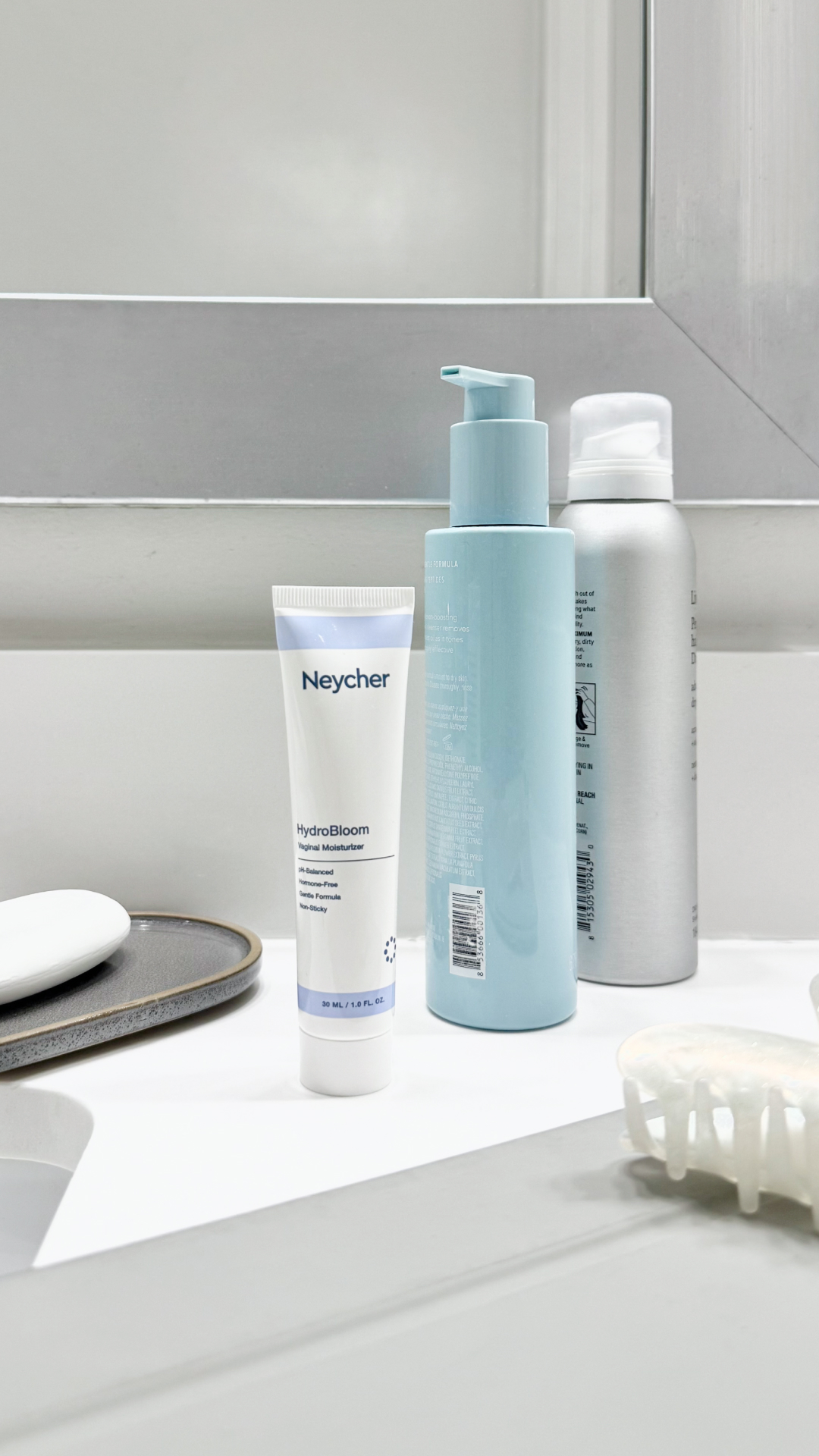
When choosing a product, formulation matters. Neycher Vaginal Moisturizer, for example, is formulated with 10mg of hyaluronic acid, a clinically relevant concentration designed to provide robust and lasting hydration. In clinical studies, 81% of women using this formula reported that they no longer experienced pain during sex. By working to restore the underlying health of the vaginal tissue, it addresses the root cause of the pain, not just the symptom of friction.
Lifestyle Factors That Make a Difference
Supporting vaginal health goes beyond targeted treatments. Staying well-hydrated helps maintain tissue moisture throughout the body. If pelvic floor tension seems to be contributing to your discomfort, working with a pelvic floor physical therapist can be genuinely transformative [5]. And open communication with your partner about what feels comfortable creates space for exploring intimacy in ways that work for your changing body.
Frequently Asked Questions
How long does it take for vaginal moisturizers to work?
While you may feel some immediate soothing effects, the primary benefits of a vaginal moisturizer build over time. Consistent use, typically every 2-3 days, is key. Most women notice a significant improvement in vaginal dryness and a reduction in pain during sex within a few weeks of regular use.
Should I use both a moisturizer and a lubricant?
Yes, using both is often the ideal approach. Think of it as a two-part strategy: the moisturizer works in the background to restore tissue health on an ongoing basis, while the lubricant provides extra comfort and slip during sexual activity. Research supports this combined approach for optimal comfort [3].
Can painful sex after menopause be completely resolved?
For the vast majority of women, yes. With the right combination of treatments, including regular moisturizing, the use of lubricants, and potentially other therapies recommended by your healthcare provider, it is entirely possible to have a comfortable and pleasurable sex life after menopause. The key is to be proactive and consistent with your chosen solutions.
For more information on managing vaginal dryness, you can read our comprehensive guide on How to treat vaginal dryness.
This article is for informational purposes only and does not constitute medical advice. Please consult with your healthcare provider for any personal health concerns.
References
[1] Portman DJ, Gass MLS; Vulvovaginal Atrophy Terminology Consensus Conference Panel. Genitourinary syndrome of menopause: new terminology for vulvovaginal atrophy from the International Society for the Study of Women's Sexual Health and the North American Menopause Society. Menopause. 2014;21(10):1063-1068. doi:10.1097/GME.0000000000000329
[2] Kao A, Binik YM, Kapuscinski A, Khalifé S. Dyspareunia in postmenopausal women: A critical review. Pain Res Manag. 2008;13(3):243-254. doi:10.1155/2008/269571
[3] Edwards D, Panay N. Treating vulvovaginal atrophy/genitourinary syndrome of menopause: how important is vaginal lubricant and moisturizer composition? Climacteric. 2016;19(2):151-161. doi:10.3109/13697137.2015.1124259
[4] Chen J, Geng L, Song X, Li H, Giordan N, Liao Q. Evaluation of the efficacy and safety of hyaluronic acid vaginal gel to ease vaginal dryness: a multicenter, randomized, controlled, open-label, parallel-group, clinical trial. J Sex Med. 2013;10(6):1575-1584. doi:10.1111/jsm.12125
[5] Streicher LF. Diagnosis, causes, and treatment of dyspareunia in postmenopausal women. Menopause. 2023;30(6):635-649. doi:10.1097/GME.0000000000002179